
Washington County Arrest Warrants Explained
A criminal case in Washington County starts small: a police report, a charging document, or a self-filed application lands on a District Court commissioner's desk. The commissioner weighs probable cause. The output can be a summons, an updated charging document, or an arrest warrant. In Circuit Court matters the State's Attorney directs the proper process instead, working under Maryland Rule 4-212. Either way, the warrant itself is a command. It orders a peace officer to arrest the person it names, which makes a Washington County arrest warrant judicial process tied directly to a charging document rather than a stand-alone order.
Probable Cause in Washington County Cases
Probable cause is the threshold. No judge or commissioner in Washington County authorizes criminal process without it. Rule 4-212 then gives the court a choice between a summons and a warrant. That rule also lists what pushes a case toward the warrant side. The factors include a prior failure to respond, a chance the person will not respond, unknown whereabouts, custody for another offense, or danger to another person or the community. Any of those can turn a Washington County summons question into an arrest.
Inside a Washington County Arrest Warrant
A warrant and its companion paperwork follow a consistent template. Maryland's own recall addendum shows the field families a warrant or summons involves. The same details sit in the records the court and the Washington County Sheriff's Office keep.
| Court and Case Number | Whether the matter is Circuit or District, plus the case number that identifies it. |
|---|---|
| Caption and Party | The State versus the named person, with the contact fields the court holds. |
| Warrant Control Number | The agency or court reference on the process. It is not necessarily a public search key. |
| Order Type | Arrest warrant, bench warrant, criminal summons, or body attachment. |
| Issuing Authority and Date | Which judge or commissioner authorized the process and when. |
| Law-Enforcement Agency | The office responsible for service, with its contact details. |
| Return Information | What happened when service was attempted, which the court and the warrant unit both record. |
Washington County Central Booking
Arresting agencies in Washington County all deliver arrestees to Central Booking. The District Court commissioner area sits inside that same facility. Sheriff's Office reports describe the workflow. Booking takes the arresting officer roughly 30 to 45 minutes now. An earlier version of the process ran three to four hours, with booking handled and the commissioner reviewing the case in the meantime.
Aggregate counts tell you nothing about one person's custody or warrant status. The commissioner office at Central Booking answers 24 hours a day at 240-313-2840. The directory lists no walk-in voluntary surrender procedure. So call the Washington County Sheriff's Office Warrant Unit first.
Serving Arrest Warrants in Washington County
The Washington County Sheriff's Office Warrant Task Force attempts and serves warrants, criminal summonses, and peace orders issued in the county. It also handles allied-agency process for people who live or work in Washington County. When someone wanted here turns up outside the county, the task force arranges extradition and transport. The unit formed on January 1, 2009. Recent reports describe eight Sheriff's Office deputies, two Hagerstown Police officers, one Maryland State Police trooper, two child-support deputies, and three civilian staff who receive and enter warrants and civil orders. Service is a physical event. An attempt, a service, and an arrest are three different entries in the record, and each one means something distinct.
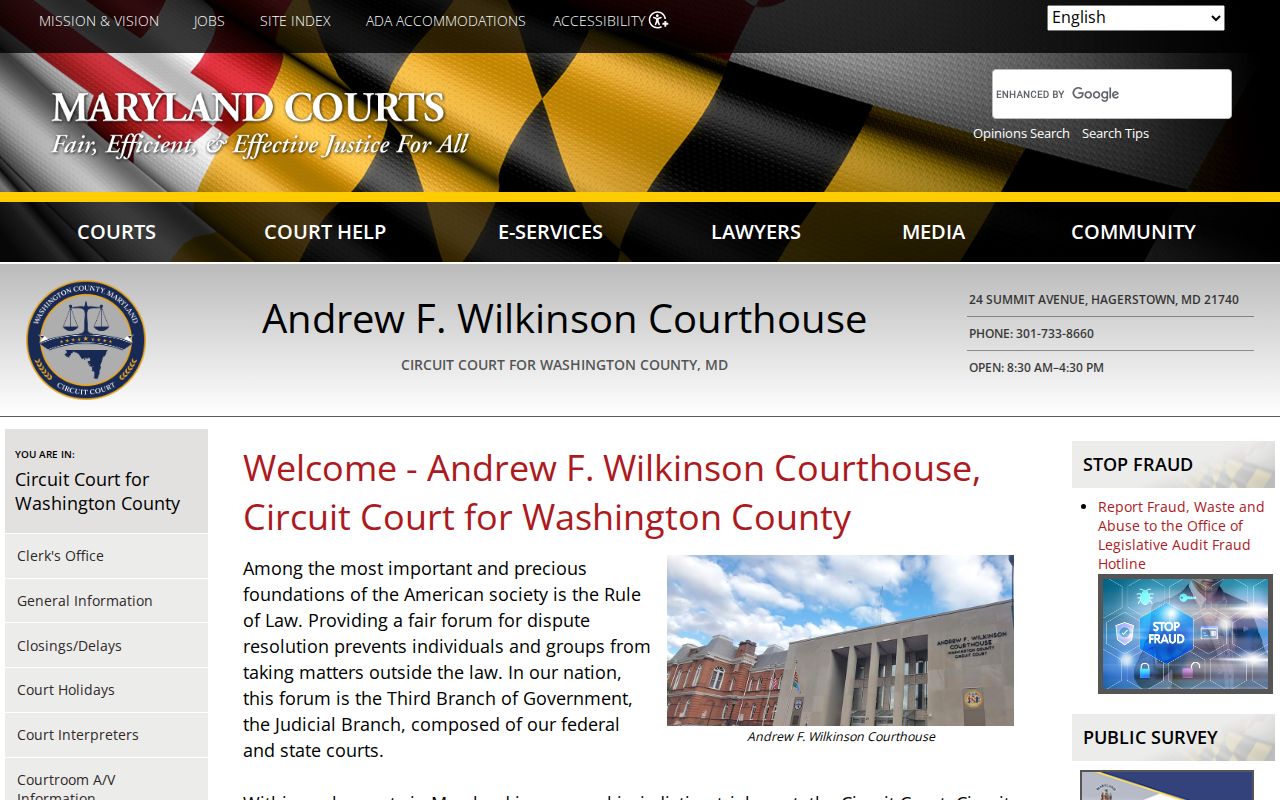
The Circuit Court building and the county court directory are published by the judiciary at the Circuit Court for Washington County page.
Why a Washington County Summary May Omit the Warrant
A case can be public while its warrant stays hidden. Maryland's access guidance treats certain warrant applications and supporting affidavits as restricted before execution and filing. It also sorts executed search-warrant material, grand jury records, criminal-investigation files, juvenile records, and sealed or expunged records into their own categories. The public case portal for Washington County adds its own caution. Its computerized information is informational only, not the authoritative record. So a docket line can show that process issued. The underlying document can still sit out of view, and only the issuing court can confirm what it says.
When a Federal Warrant Is Not a County Warrant
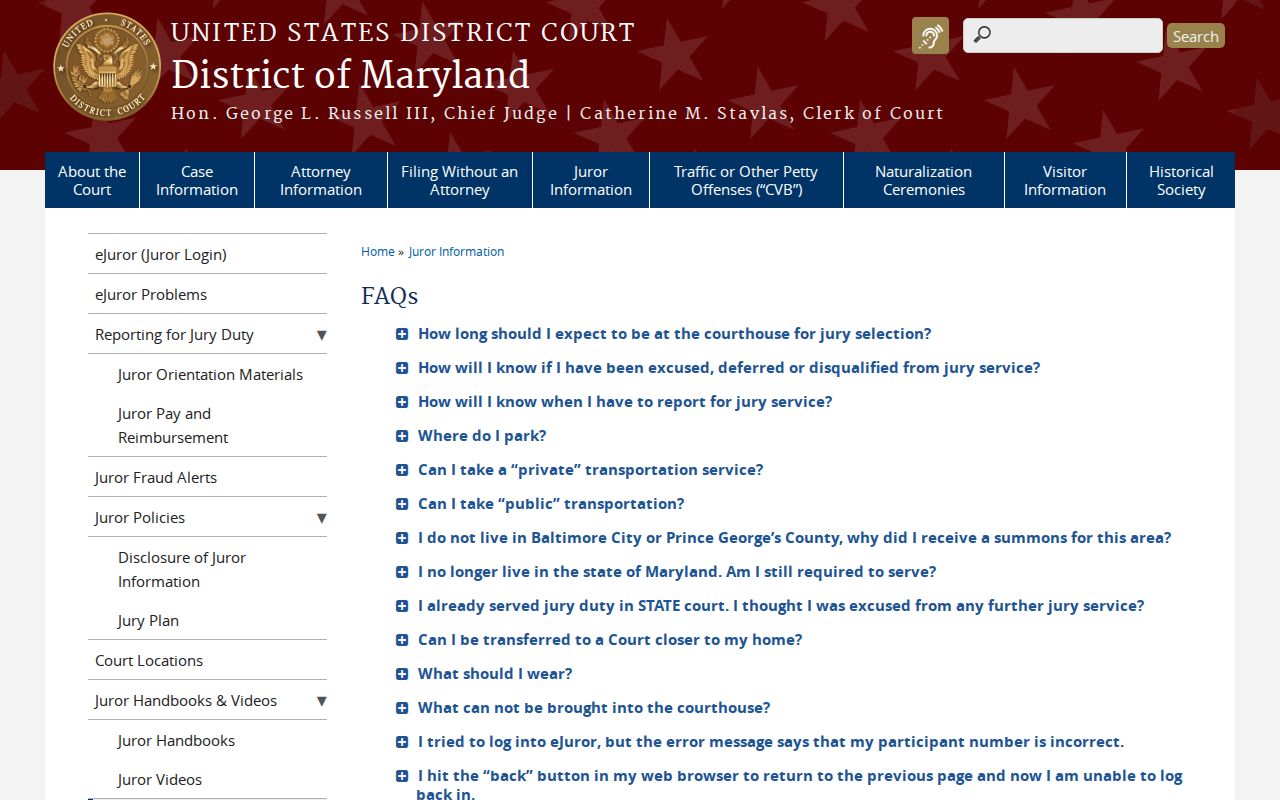
Washington County sits inside the U.S. District Court for the District of Maryland. That court's jury FAQ places the county in the Baltimore reporting group. Federal criminal dockets follow federal access rules, not county ones. Federal warrant records may be sealed on top of that. A federal matter does not belong at a county counter or on a county list. The federal route runs through the district court clerk and PACER, which charges under federal fee rules. The U.S. Marshals District of Maryland executes federal warrants from offices in Baltimore and Greenbelt, not Hagerstown.
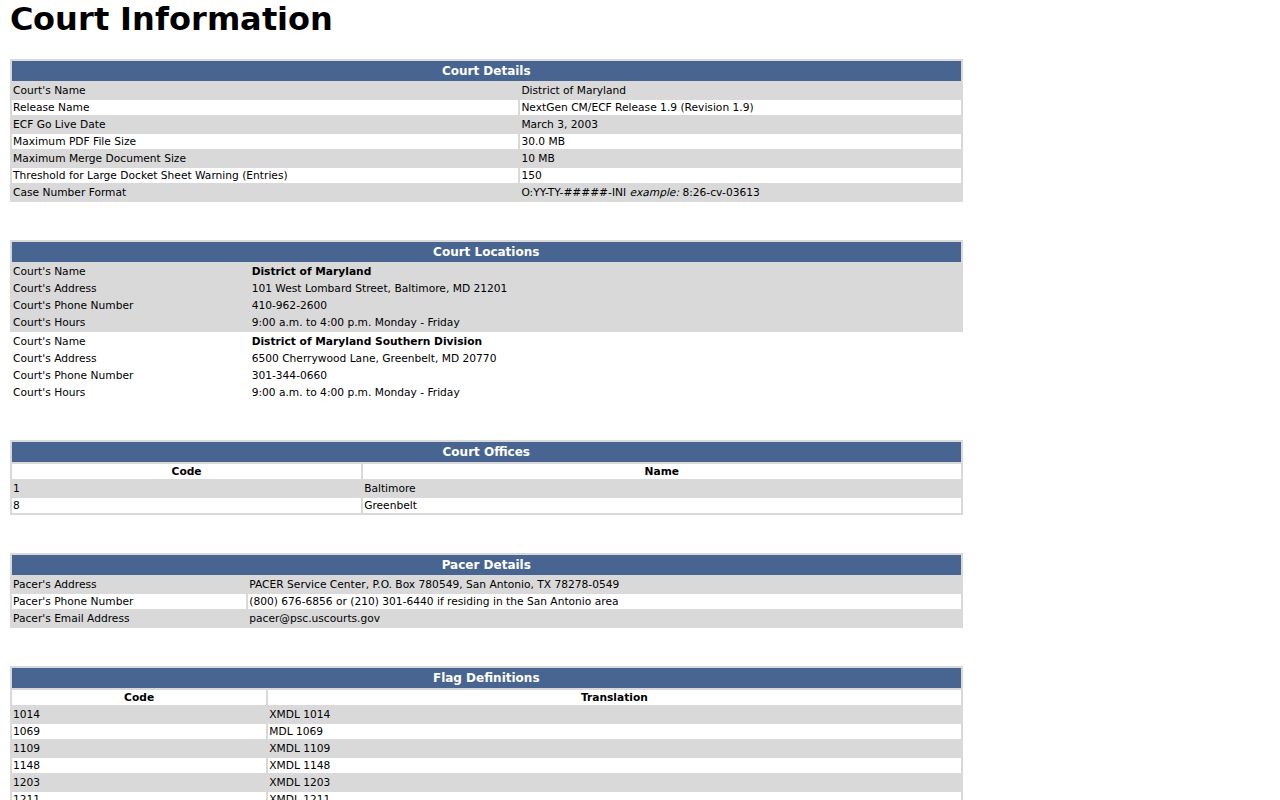
The federal court publishes locations, phones, and case-number patterns through District of Maryland CourtInfo.
The county's federal jury assignment appears in the District of Maryland jury FAQ.
Comparing Arrest, Summons, and Bench Warrants
Arrest warrants, summonses, and bench warrants look alike on paper and act differently in practice. The Washington County Sheriff's Office tracks criminal summonses separately from warrants. That split is a useful reminder that a summons is its own category with its own count.
| Process | What It Does | Who Issues It | Typical First Step |
|---|---|---|---|
| Arrest warrant | Commands a peace officer to take the person into custody | Judge or commissioner on probable cause | Talk to an attorney about surrender and bond |
| Criminal summons | Requires an appearance without an immediate arrest command | The issuing court | Follow the appearance date on the summons |
| Bench warrant | Arrest process in an open case after a missed obligation | Judge, or clerk on a judge's order | Contact the court that set the case |
If There's an Arrest Warrant for You
Do not learn the details at a traffic stop. If you believe an arrest warrant exists in your name, talk to a Maryland criminal-defense attorney first. Then confirm the current status with the Washington County Sheriff's Office Warrant Unit and with the court that issued the process. Bring the case number. Bring the charge. Bring any paperwork you already have.
Urgent: an active Washington County warrant can lead to arrest anywhere in the county, and bond posting runs through the Sheriff's Office rather than the clerk's counter, so confirm the method before you travel.
Only the court changes a warrant's status. The steps that do it in Washington County are an appearance, a motion filed through the proper clerk or counsel, a payment plan where one applies, or a court order recalling or quashing the process. None of that happens at the counter by itself. The home page section on what to do if you have a Washington County warrant lays the options out in order. Work through it before you call.
What to Bring When You Call the Clerk
Call the Washington County clerk with a case number in hand. The office works from case numbers, not names, so that one detail speeds everything up. Before dialing, write down what you know: the case number, the person's full legal name as spelled in court records, the date of birth, the court, the charge, and the hearing date. One sheet of paper keeps the call short and focused. Once you reach the clerk, ask two questions about the Washington County matter. What does the public record show on this case? And what access rule covers anything the office cannot release? From there, use the right number for the court involved. Circuit matters go to 301-733-8660. District matters go to 240-420-4600.